
How AI Search Actually Finds Local Businesses (And Why Some Get Left Out)
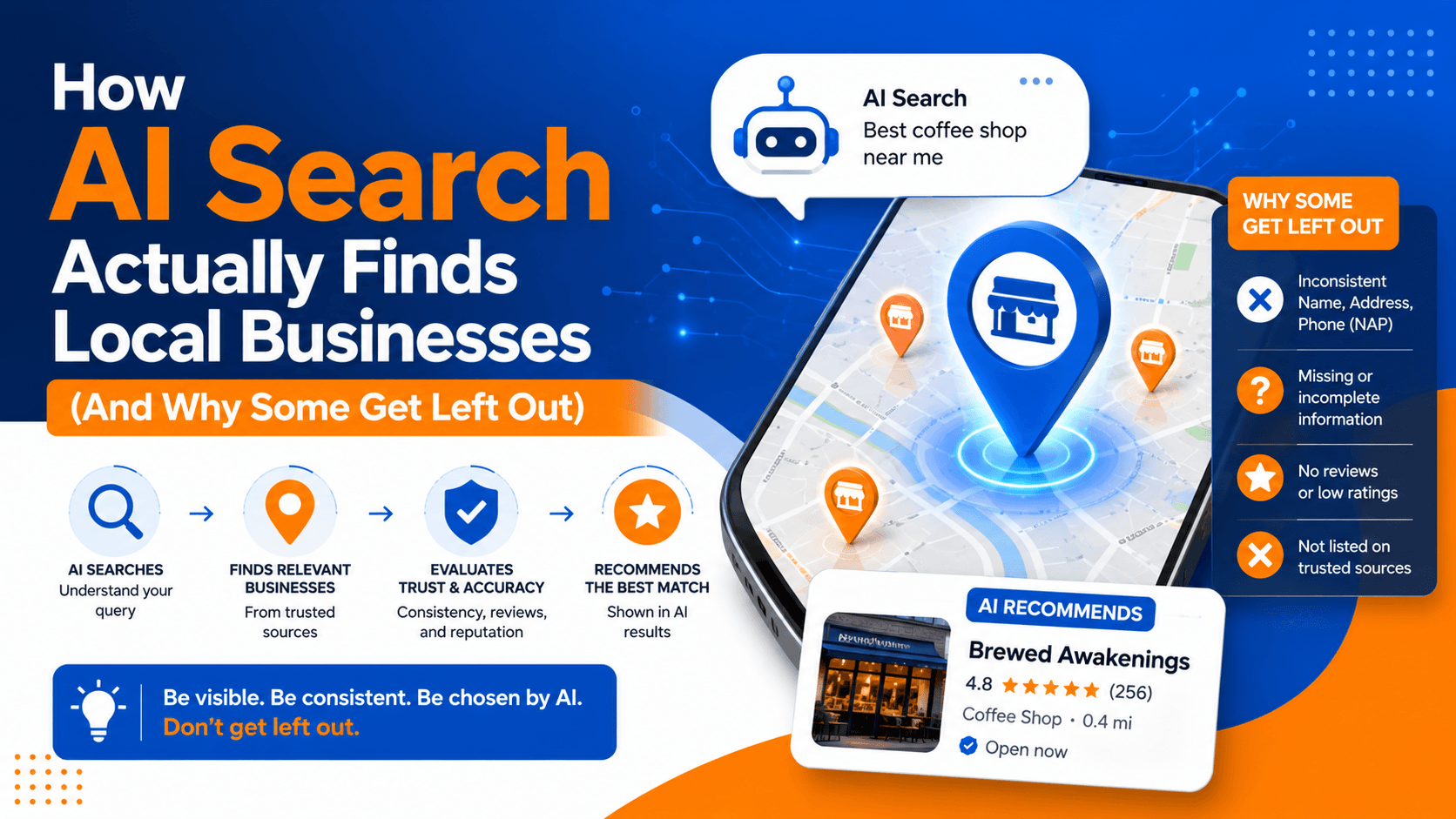
Someone recently told me they asked ChatGPT for a good bakery near their new apartment, and it recommended a place that had closed two years earlier. That’s a small, almost funny example of a much bigger shift happening in how people find local businesses.
AI search tools like Google’s AI Overviews, ChatGPT Search, and Perplexity aren’t just scanning a webpage and repeating it back. They’re pulling from a mix of sources, cross-checking details, and trying to answer a question with confidence. If your business information is thin, outdated, or inconsistent, you’re easier to leave out entirely.
AI Tools Reward Clarity Over Cleverness
Traditional search rewarded keyword placement. Answer engines reward clear, well-structured, factual information that’s easy to extract and summarize. That means your website and profiles should plainly state what you do, where you operate, and who you serve, without burying it in vague branding language.
If a customer might ask ‘does this bakery deliver on weekends,’ your website should answer that question somewhere in plain text, not just imply it through a menu graphic. AI tools pull from text they can parse and confirm, and a direct answer is far more useful to them than clever copy.
Consistency Across Sources Builds Machine Trust
Because AI search tools often cross-reference multiple sources before generating an answer, having the same accurate business details appear consistently across your website, your Google Business Profile, and directories matters even more than it used to.
This is where a listing on a directory like listedpro.co becomes genuinely useful, not as a ranking shortcut, but as one more verified, structured source that confirms who you are, what you offer, and how to reach you. When multiple independent sources agree, AI systems have more reason to trust and surface that information confidently.
Practical Steps for AEO, Not Just SEO
Write your service pages and ‘About’ section like you’re answering a real question someone would type or speak into an AI assistant. Use natural phrasing, not jargon. Think in terms of the actual questions customers ask, like ‘is this open on Sundays’ or ‘do you serve gluten-free options,’ and answer them directly somewhere on your site.
Keep your business category, service area, and offerings updated everywhere they appear. AI answer engines are only as good as the freshest, most consistent information available to them, and outdated listings can actively work against you by surfacing wrong details.
Being Findable Is the New Baseline
AI search isn’t replacing local SEO, it’s layering on top of it. The businesses that show up accurately in these new tools tend to be the ones that already had their basics in order: clear information, consistent details, and a presence across trustworthy, verifiable sources. Start there, and you’re already ahead of a lot of businesses that haven’t caught up yet.
Frequently Asked Questions
Not entirely differently, but the emphasis shifts toward clarity and consistency. Write plain, direct answers to common customer questions and keep your business details accurate everywhere they appear. Good local SEO habits already support most of this.
It can help by acting as one more consistent, verifiable source of your business information. AI tools often cross-reference multiple places before answering a question, so accurate listings add to the overall picture, though no single listing guarantees a mention.
AI tools sometimes pull from outdated or unconfirmed sources. This is exactly why keeping your listings, website, and Google Business Profile current matters. Stale information anywhere online can get picked up and repeated inaccurately.
Yes, voice search relies on similar principles. People ask spoken questions in natural language, so having clear, conversational answers on your site and profiles helps voice assistants find and read back accurate information about your business.